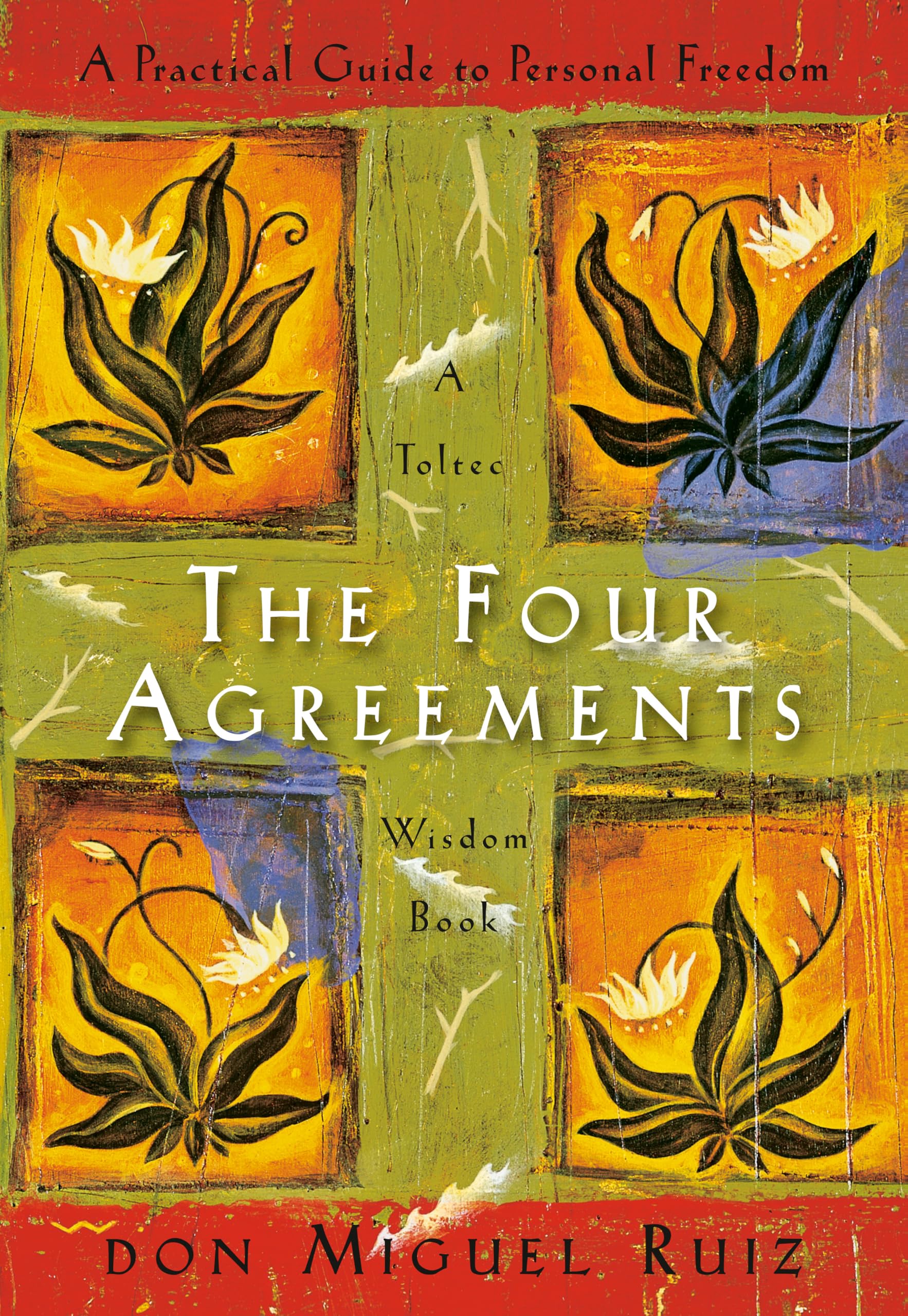
One year ago, my youngest sister Cate was telling me about this book that she found in Byron Bay, called The Four Agreements. She described it as a bite-sized, digestible, empowering and life-changing book that highlights four simple principles for a peaceful life.
Truth be told, I largely forgot about Cate's book review. But when I travelled down to Byron Bay with my girlfriend Bailee, I randomly found the book in a crystal shop (of all places). It was for sale for $22... I picked it up without hesitating.
It took me three days to read it, and despite it only being 140 pages, the power behind these pages is like nothing I have ever read in any self-help book. The Four Agreements shifted my perspective on my own life, the lives of those around me, and the outlook I hold on the things that are valuable to me.
Prior to teaching us about these agreements, Ruiz explains that humans have been trained to suffer unnecessarily due to lies that make up our perception of our existence. A negative self perception that is engrained into us as children leads us to exist in a world of negativity. Our existence is our dream of life – and when a dream is made up of lies and negativity – that dream becomes a nightmare.
This nightmare is fuelled by negative emotions. With the nightmare being a parasite, the food is the fear-derived emotions, such as envy, hatred and jealousy. We have a desire to be loved and accepted by all around us, yet we continue to reject ourselves.
These habits lead to our domestication. To get out of this hell that we have manufactured for ourselves, we need to become aware, and then we need to bring intention towards changing. This takes us to the four agreements.
Don Miguel Ruiz preaches four principles; be impeccable with your word; don't take anything personally; don't make assumptions; always do your best. Each of these four agreements play off of each other, and work together to promote a peaceful, joyful and purposeful life.
Learning and understanding these agreements changed my outlook on life. Our word is our projection of ourselves into the world. If we live by the principles of keeping our word, using the word for positivity, and saying what we mean, the impeccable nature of our word will improve our value perception of ourselves, whilst spreading joy to those around us.
The next lesson from Ruiz focusses on not taking anything personally. This lesson stuck out to me, as I tend to take everything personally! When people are critical of you, or are presenting some sort of negative demeanor, this is not a reflection of us but rather a reflection of them.
For example, if someone were to call me ugly, it's crucial for me to understand that this does not make me ugly, but rather reveals that this person is feeling discontent or unhappy within themselves. Having this knowledge allows us to know that nothing is personal, and we can use the projections of other people as an insight into their character.
A powerful and notably relatable lesson from this book is the emphasis on not making assumptions. When we generate scenarios in our head based on the outcome of a situation that has not happened, this assumption often dictates the action we take.
A personal example is when I need to have a conversation with a colleague about something I disagree with. This conversation risks confrontation, and I find myself assuming confrontation, which discourages me from having the conversation. The power of pairing your impeccable word with your ability to not take things personally will allow you to say and do what is required. This leaves no room for assumption – a powerful lesson.
The final lesson takes the first three agreements, and encourages readers to always do their best. Whether our best is a little less than it was yesterday, or whether we're feeling energised and ready to conquer the world, it's key to the success of the above agreements that we proceed with our best effort.
Ruiz highlights that we won't always be impeccable with our word. We may still make assumptions, or take an insult personally. What is important here is that we are consciously making our best effort to get better with these agreements, and always moving towards the goal of peace and prosperity.
This book was an absolute cracker. I've lent it to Cate (with some annotations of my own) so that she can have a refresher. I'd strongly recommend this book to anyone who is looking for a simple and digestible read that genuinely shifts how you see the small things.
Even if nothing comes of these agreements – which I highly doubt – the lessons alone have shifted my perspective on enjoying the little things in life, and working towards being more positive.
Discussion